 Wishlist
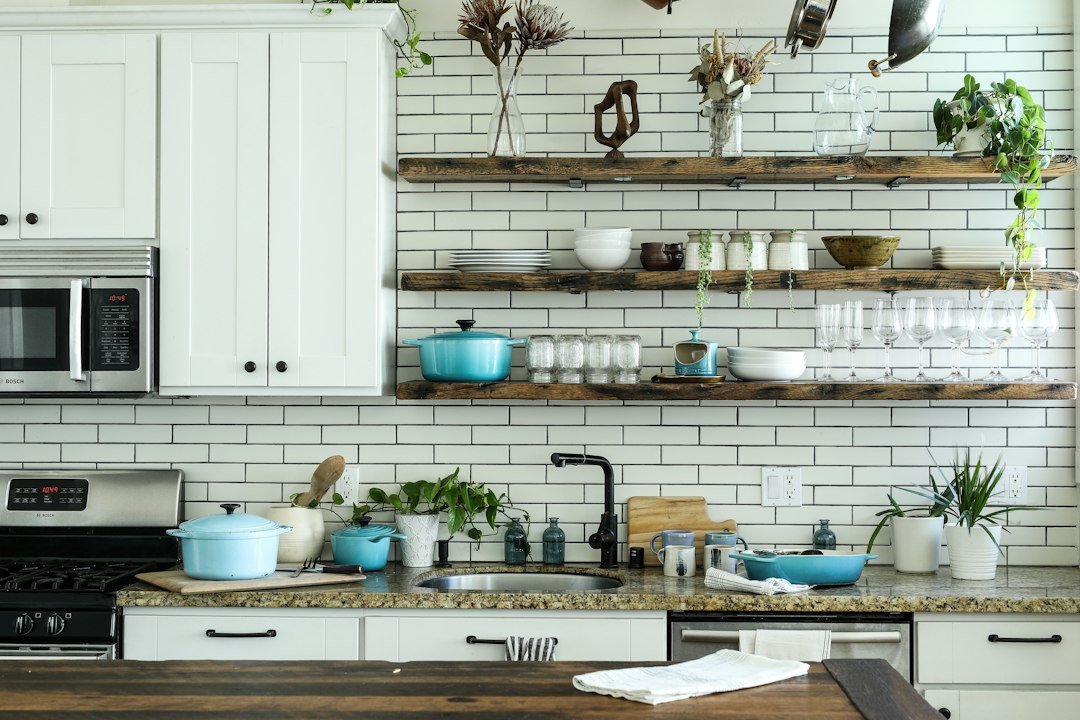
When your kitchen square footage is limited, not every storage trick is worth the effort. What matters most is keeping daily prep items accessible, getting bulky cookware off counters, and using vertical and hidden spaces. Ignore purely decorative solutions that don’t change how you use the room. Below are 12 practical small kitchen storage ideas—some quick wins, some slightly larger projects—each with clear trade-offs and examples so you can pick what fits your layout and budget.
Use the walls: hang tools where you reach for them
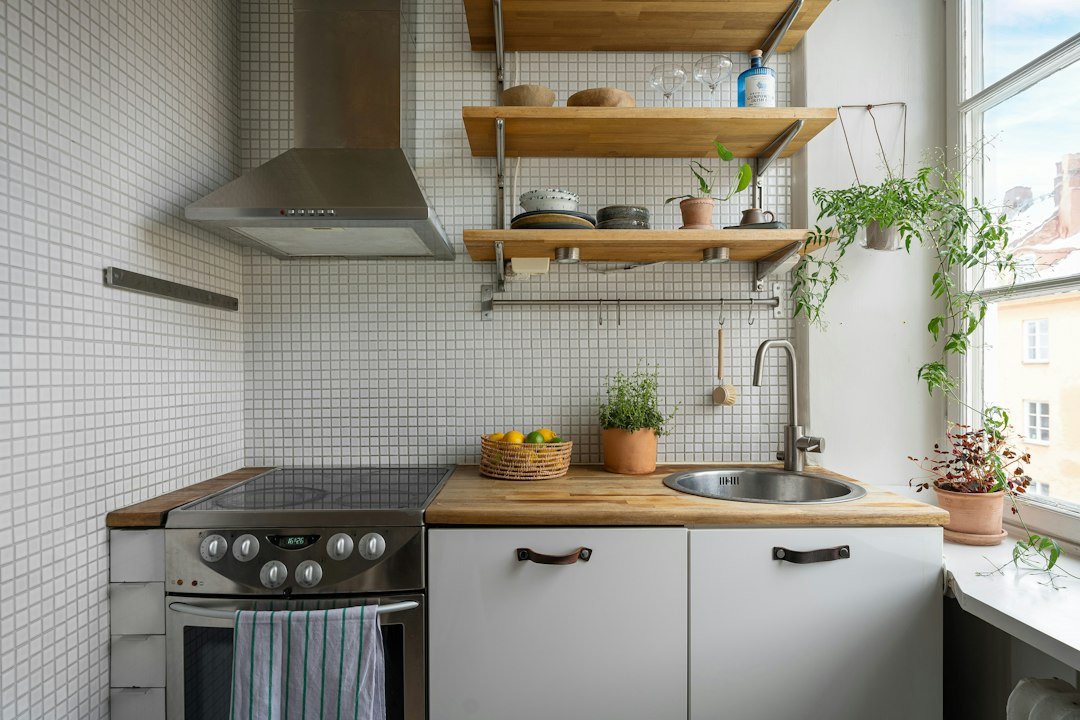
Mount a magnetic knife strip, a pegboard, or a rail with S-hooks above the prep area. This frees drawer space, keeps knives visible and safe, and makes frequently used utensils easy to grab. For a small kitchen, limiting hanging tools to a curated "everyday" set (not every gadget you own) prevents visual clutter.
Install a slim pull-out pantry next to the fridge
Slim vertical pull-outs (6–10" wide) are perfect for spices, oils, baking supplies and canned goods. They require minimal depth and turn a dead gap into organized storage. If you rent, freestanding slim carts on casters offer the same narrow profile and can be rolled out when needed.
[hAZAM_IMAGE query="slim pull-out pantry next to refrigerator in narrow kitchen" alt="narrow pull-out pantry filled with jars and cans"]Convert cabinet doors into storage
Attach racks or shallow baskets to the inside of doors for pot lids, cutting boards, wraps and spices. This keeps cabinet interiors clear and makes small items instantly visible—especially useful under the sink where cleaning supplies otherwise pile up.
Use a pull-out organizer for pots and pans
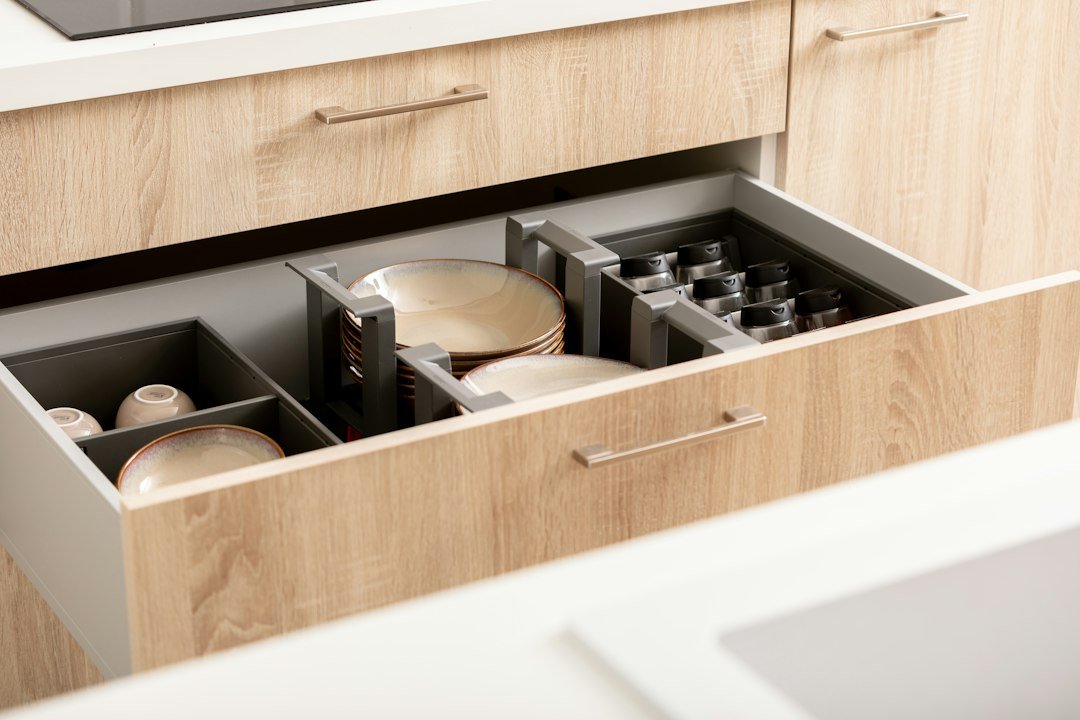
Deep lower cabinets are wasted if pots are stacked awkwardly. A sturdy pull-out pots-and-pans organizer stores lids and pans vertically for easier access. For many kitchens this is the single biggest usability improvement.
Stack vertically with risers and shelf inserts
Double the usable shelf height inside cabinets using adjustable risers or plate holders. Wire shelf inserts let you stack mugs or bowls without toppling; risers are cheap and reversible—ideal for renters. Only stack items you use together to avoid the "I’ll dig later" problem.
Go shallow with tension rods and trays
Tension rods in lower cabinets create divided spaces for cutting boards and pan lids. Shallow pull-out trays or baking sheet racks make use of the front-to-back depth that’s often wasted in cabinets with only one pull-out shelf.
Create an over-the-sink station
An over-the-sink shelf or roll-up drying rack adds short-term workspace and frees countertop space. Use it for chopped ingredients or drying dishes; choose models that collapse when not in use so they don’t dominate sightlines in a small kitchen.
Make use of corners with a lazy Susan or pull-out carousel
Blind corners are notorious for wasted space. A lazy Susan or corner pull-out carousel transforms that awkward volume into reachable storage for pots, small appliances, or pantry staples. Measure cabinet depth and door swing before buying to ensure the unit works with your layout.
Choose clear, stackable containers for pantry and fridge
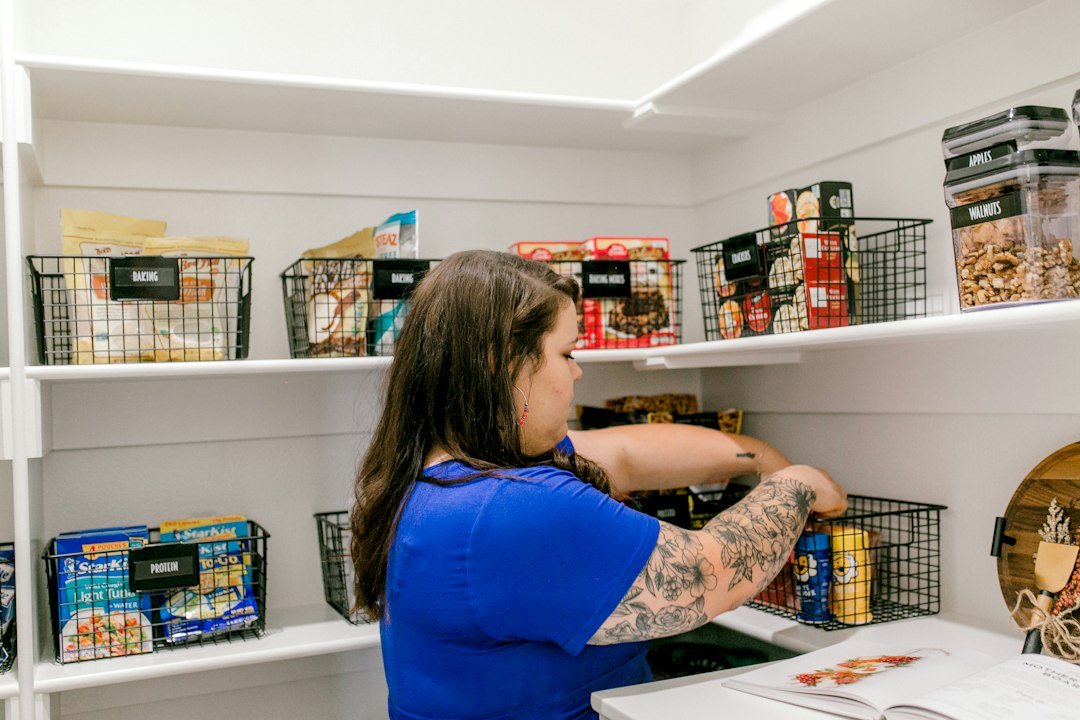
Uniform clear containers for dry goods and fridge bins make everything visible and stackable. Label the lids or fronts with contents and dates. The upfront cost and transfer time pay back quickly in less food waste and fewer duplicate purchases.
Use vertical dividers for baking sheets and cutting boards
Thin vertical dividers turn a flat pile of baking sheets, cooling racks and cutting boards into easy-to-reach slots. Place this organizer near the oven or in a lower cabinet so you don’t have to crane or shuffle heavy items.
Keep a designated "prep zone" on a cart or butcher block
If countertop space is scarce, a rolling cart or a small butcher block on casters becomes a mobile prep station. It can hold a cutting board, a few most-used bowls or appliances, and tuck away when you need counter clearance. Look for models with a shelf or drawer to add storage without adding clutter.
Under-sink: zone and use pull-out bins
Under the sink can be chaotic because of plumbing. Use pull-out bins or a two-tiered sliding organizer to keep cleaning products upright and separated from dish tools and trash bags. Avoid loose sprays that tip over—bottles with flat sides or a grouped caddy reduce spills.
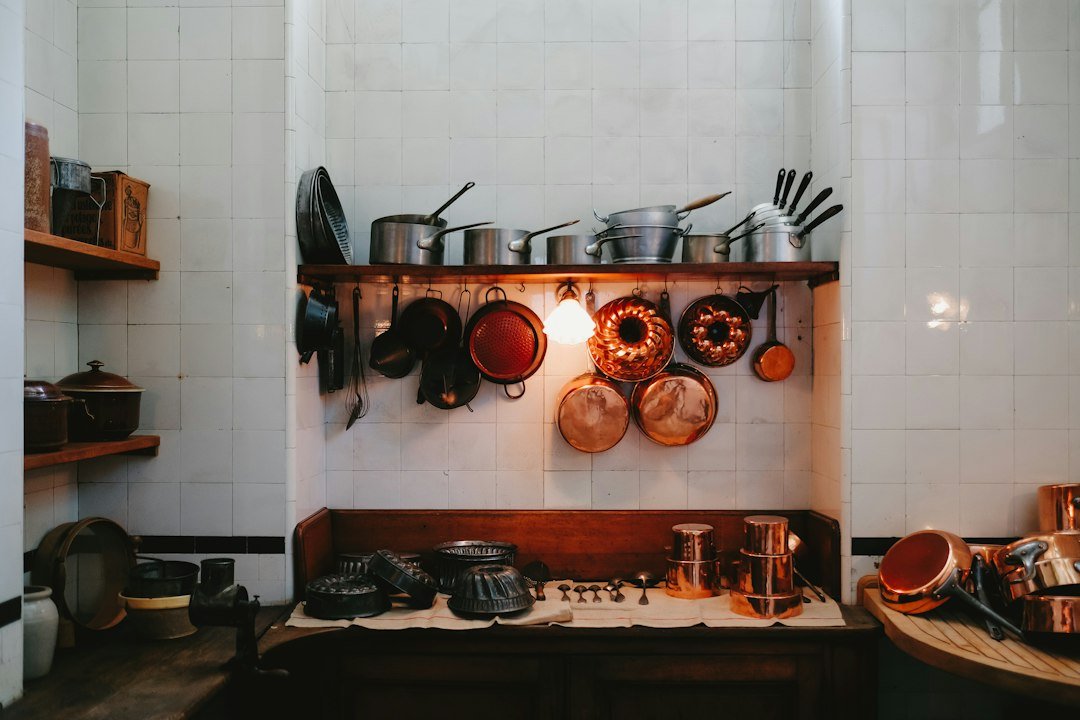
Small kitchens benefit more from a handful of well-chosen systems than from trying to fill every inch with accessories. Pick solutions that match how you cook and what you use every day, and keep the rest boxed or stored elsewhere.
- Measure cabinet depths, door swings and gaps before buying organizers.
- Decide one “everyday” zone (prep, pots, or pantry) to prioritize first.
- Choose vertical or pull-out solutions where possible for visibility and access.
- Replace mismatched containers with 2–3 sizes of clear stackable bins.
- Measure the space for any recommended product (e.g., pot organizer) to ensure fit.
Convert dead spaces—walls, narrow gaps and cabinet doors—into purposeful storage and replace stacked, hard-to-reach piles with vertical or pull-out systems. Start small: one change that reduces daily friction (pots, pantry or prep) will feel like a much larger win.
What is the best place to start in a small kitchen?
Begin with the area that causes the most daily frustration—usually pots and pans or the main prep zone—and make that task noticeably faster with a pull-out or wall-mounted solution.
Are magnetic strips safe for knives?
Yes—choose a high-quality, fully magnetized strip and mount it out of reach of children. Ensure blade contact is along the spine, not the cutting edge, to reduce dulling.
Can I install pull-out organizers in rental kitchens?
Many pull-out organizers are freestanding or install with minimal hardware; look for no-drill options or talk to your landlord about reversible installations.
How do I decide between open shelving and closed cabinets?
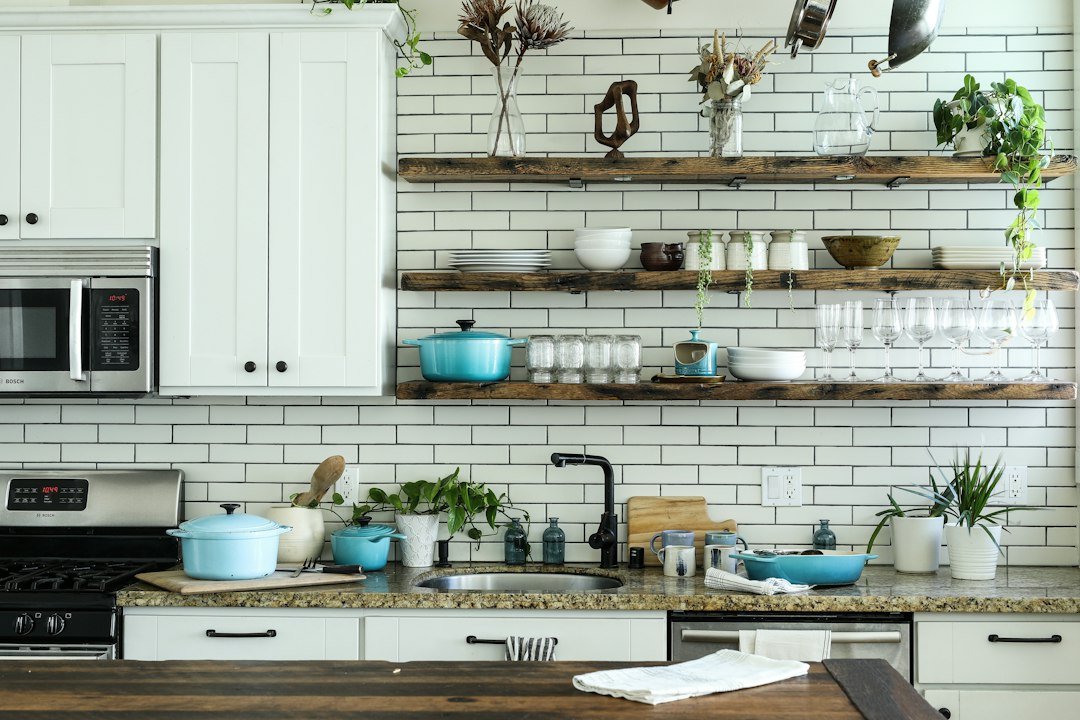
Open shelving is good for frequently used items you want visible; closed cabinets are better for less attractive or infrequently used items. In small kitchens, mix both and avoid overfilling open shelves.