 Wishlist
What you'll end up with: drawers that stay useful, not messy
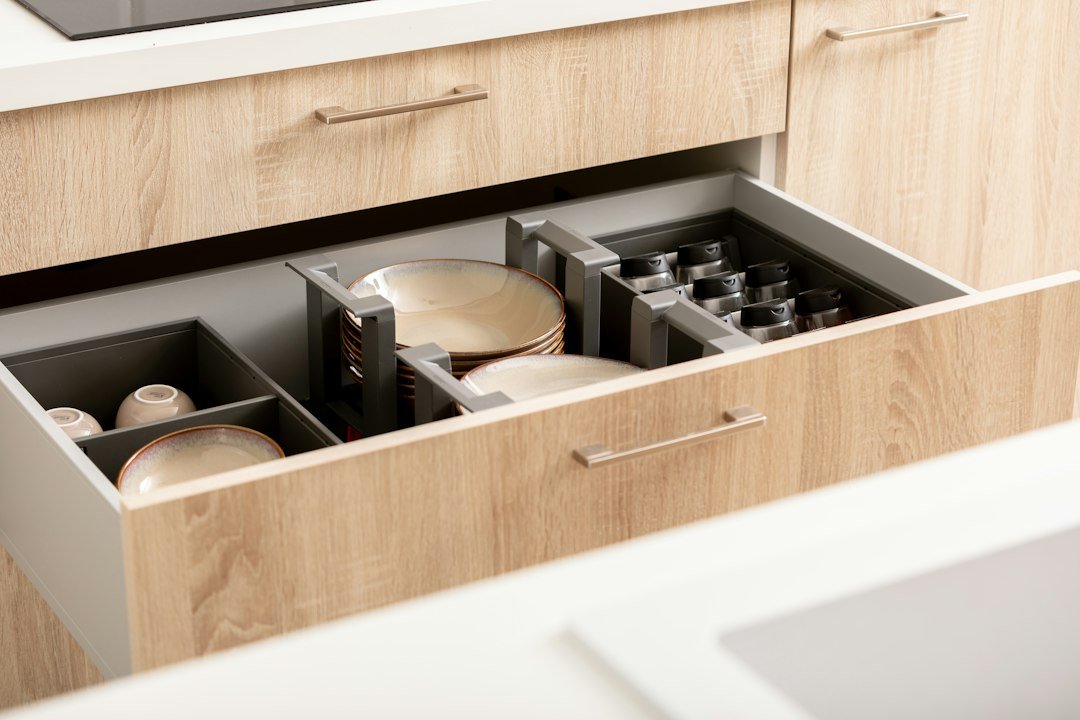
Organize kitchen drawers into clear zones so you can find tools quickly: a shallow drawer for daily utensils, a deep drawer for pots and lids, a dedicated junk drawer tamed with small bins, and one or two specialty drawers (spices, baking tools, or wraps). Everything will have a home that fits the tool’s shape and frequency of use.
Quick prep: clear the drawer, know the problem
Empty the drawer completely. Wipe or vacuum crumbs and take a quick photo — the before image helps you remember items that don’t belong. As you remove things, make three piles: keep (frequently used in this space), relocate (belong elsewhere), and discard/donate (broken, duplicate or unused).
Sort by function and frequency
Group like with like and think about how often you use each group. For example:
- Everyday utensils (spatulas, serving spoons) — keep near prep/cooktop.
- Cutlery and flatware — in the most accessible shallow drawer.
- Gadgets (zesters, melon ballers) — group small tools together.
- Miscellaneous or “junk” items — corral in small removable boxes.
Keep only duplicates you actually use; excess duplicates belong in storage or donation to avoid taking prime drawer space.
Measure and map the drawer before buying organizers
Measure width, depth (front-to-back), and usable height from the bottom to the underside of any overhanging drawer above. Note drawer construction: fixed bottom or removable liner, dovetail or simple box, shallow (2–3") or deep (4–8"+). Sketch a simple layout on paper: imagine zones for cutlery, daily tools, and oddments.
Choose the right organizers and materials
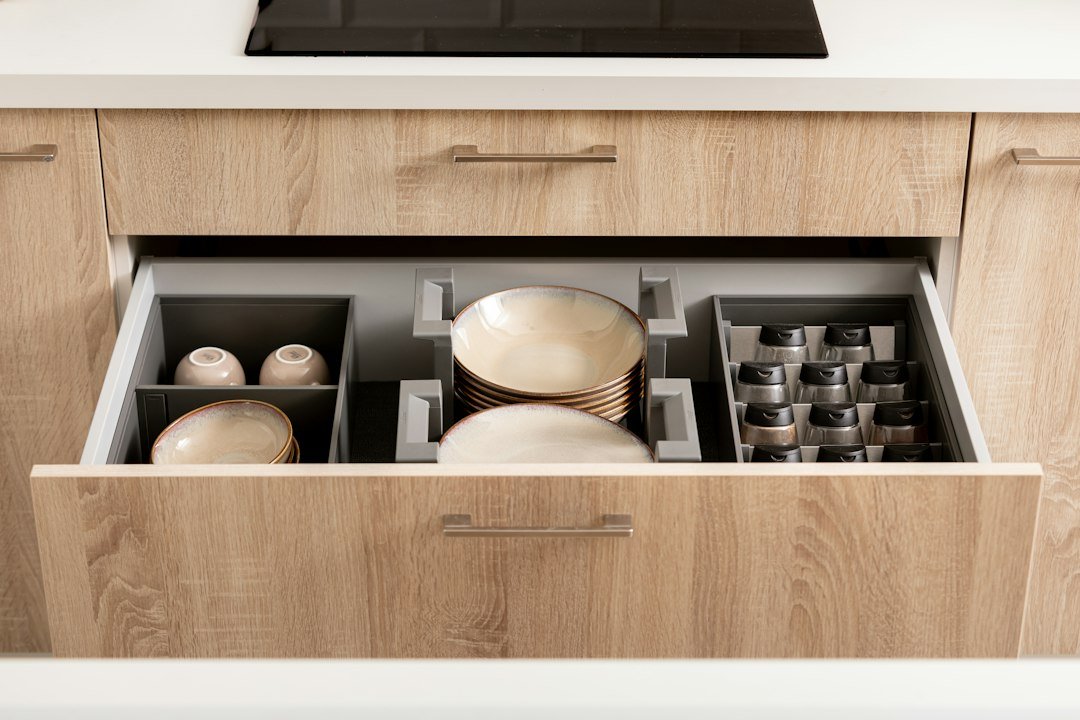
Match organizer type to the drawer and items:
- Shallow drawers: segmented cutlery trays or bamboo expandable organizers work best for forks, knives and spoons. They keep items flat and visible.
- Medium/deep drawers: modular bins, small baskets or adjustable dividers for gadgets and measuring cups. Taller items can stand upright in a deep section.
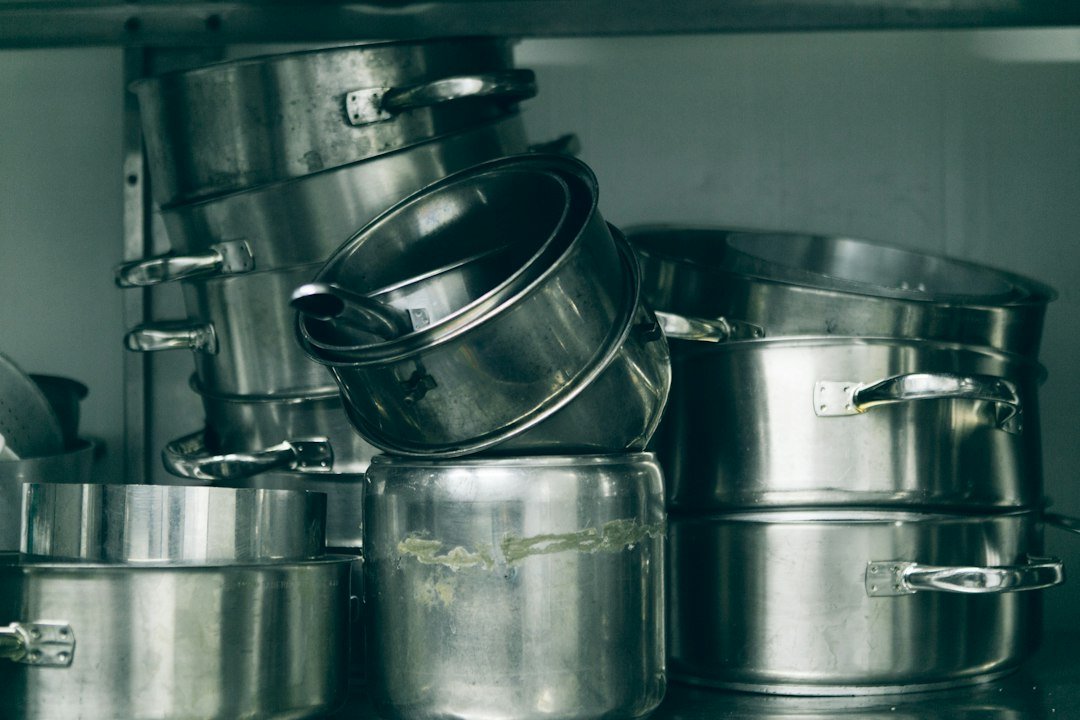
- Pots and lids: use a pot organizer or vertical rack to avoid stacking that scratches and hides lids. (A pot organizer product is helpful if you have limited cabinet space.)
- Junk drawer: small clear containers or a multi-compartment tray to keep batteries, rubber bands and tape separated.
- Drawer liners: non-slip liners protect surfaces and prevent sliding; cut to fit or buy rolls for custom lengths.
Product recommendation (fits many standard drawers and helps maintain order):
The listed bamboo expandable organizer (ID 159) is ideal for shallow cutlery drawers and fits a range of widths, keeping utensils separated without fitting poorly.
Install and arrange with intent
Place the most-used items closest to where you stand when preparing food. For example, position spatulas and tongs near the cooktop; everyday forks and spoons near the dishwasher exit for easy unloading.
- Lay the liner first, trimming to fit.
- Set large organizers in place, then arrange smaller trays inside remaining gaps.
- Load items by frequency — daily items front and center, seldom-used tools toward the back.
Labeling and visual cues to keep order
Use small, discreet labels on the organizer compartments or the drawer face for shared kitchens. For family members who prefer visuals, a label or icon reduces the “where does this go?” question and increases compliance.
Maintenance habit: 2 minutes every week
Set a short weekly check: return misplaced items to their zones, wipe crumbs, and remove anything that migrated into the drawer. A single two-minute tidy prevents the slow creep back to chaos.
Troubleshooting and adaptations
Drawer is too shallow for rigid trays
Use low-profile silicone or fabric trays and add narrow vertical dividers for utensils. Alternatively, relocate deeper items elsewhere and reserve the shallow drawer for flatware.
Odd-shaped tools keep falling over
Add small bins or foam inserts that create snug compartments. Elastic straps screwed lightly to the inside of deeper drawers can hold long tools in place (only if your drawers are sturdy).
You don’t want to buy new organizers
Repurpose small boxes, ice cube trays for tiny parts, or cut down a wider plastic tray. A DIY solution is better than nothing, but measure first to keep a tidy appearance and function.
Special cases: pots, baking sheets and lids
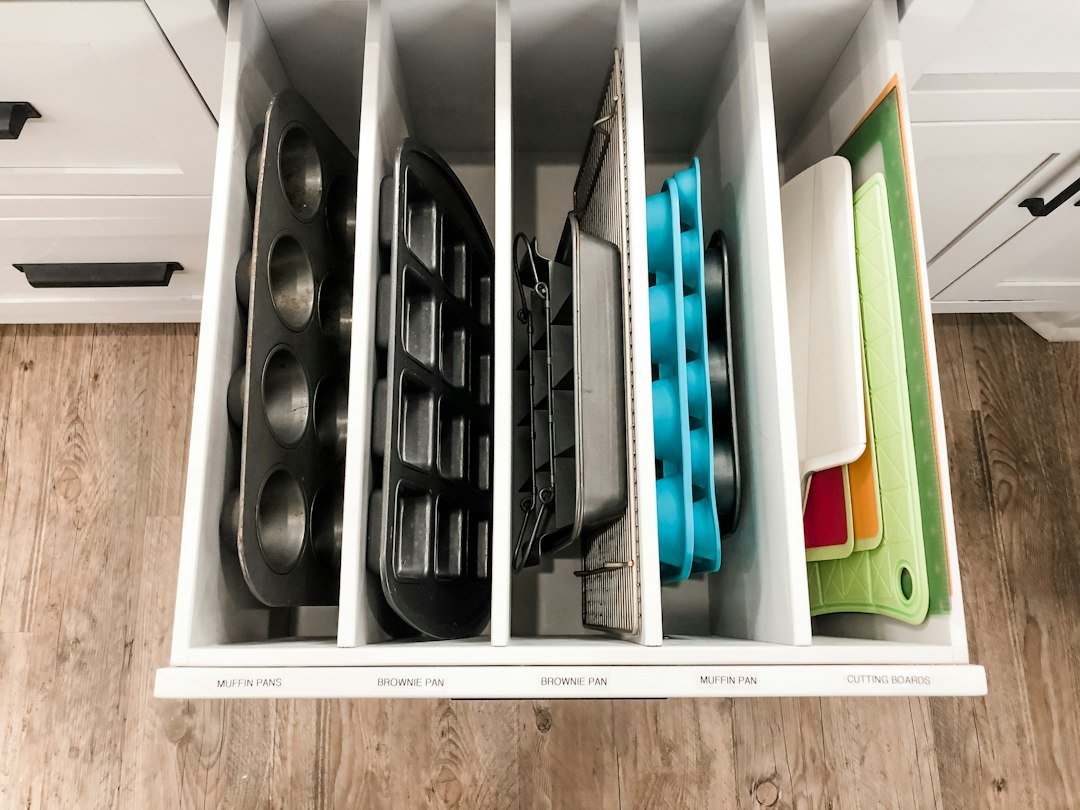
Large flat items like baking sheets and cutting boards need vertical dividers or a dedicated tall drawer. Lids are easiest kept in a slotted organizer so they stand upright by size. If cabinet space is tight, consider a pull-out pot organizer product for under-shelf or under-cabinet mounting.
One sensible decision to make now
Decide whether to prioritize cost or convenience: buy a well-fitting organizer for your most-used drawer (cutlery or utensil drawer) now, and DIY for lower-priority drawers. Start with the drawer you touch most often — its improved function propagates better habits elsewhere.
- Empty and sort every item into keep/relocate/discard piles.
- Measure drawer width, depth and interior height before buying organizers.
- Select organizers matched to drawer depth (shallow vs deep).
- Add non-slip liner and small compartment bins for oddments.
- Place daily-use items nearest your prep and cooking zones.
- Schedule a two-minute weekly tidy to maintain order.
Focus on one drawer at a time: clear it, measure it, choose a fitting organizer, and arrange items by frequency. Spend on a quality organizer for the drawer you use most; maintain order with a brief weekly check.
How do I choose between bamboo and plastic drawer organizers?
Bamboo is sturdy and looks neat for visible drawers; plastic is lower-profile and often adjustable. Pick bamboo for appearance and durability, plastic for tight fits and shallow drawers.
What’s the best way to organize a junk drawer?
Empty it, sort items into small clear containers or modular trays, label compartments, and remove anything that doesn’t belong in the kitchen.
Can I store sharp knives in a drawer safely?
Yes—use a knife block insert or a magnetic strip fitted inside the drawer. Never loose-store sharp blades; use protective sheaths if necessary.
How do I handle mismatched or broken utensils?
Keep only the tools you use; mend or replace items if needed and donate duplicates or seldom-used pieces to free drawer space.